An MP justified his remarks about having enough manpower for 10 years of war with Russia
07.04.2026 09:20
The Rada committee removed the restriction on financial monitoring of politically exposed persons from the draft law on raising taxes
07.04.2026 11:21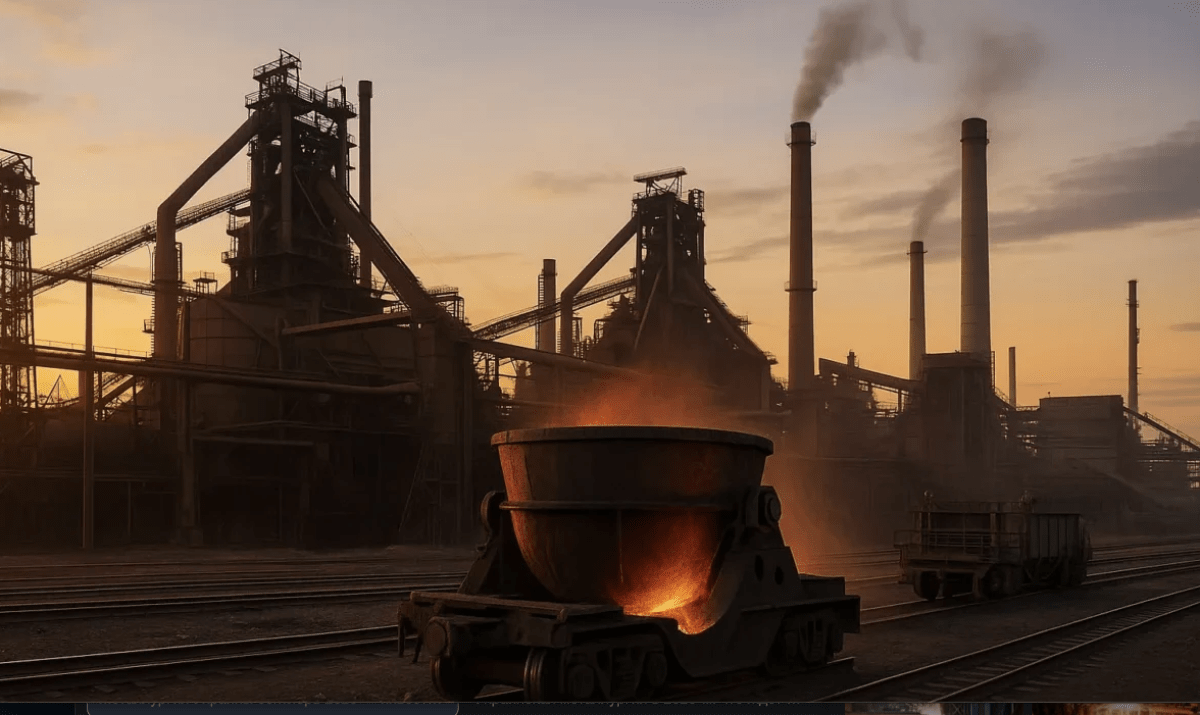
Ukraine could lose two metallurgical plants if it does not secure, in the near future, a postponement of the introduction of the European Carbon Border Adjustment Mechanism (CBAM).
This was stated by Stanislav Zinchenko, director of the Ukrainian analytical center GMK Center.
The European Union is introducing this mechanism for all exporting countries in order to level the playing field between European producers, who already pay for CO2 emissions, and importers. For Ukraine, the implementation of CBAM is linked to its obligations to the EU within the framework of greening the economy and integrating into the single European market.
According to Zinchenko, a postponement is necessary because the introduction of the new mechanism could cost Ukraine up to $5 billion in export revenue per year. Industry will be hit first and foremost, especially metallurgy, which risks losing competitiveness on the EU market due to additional environmental payments.
The situation is worsened by the war: Ukrainian enterprises do not have sufficient financial and technical resources for the rapid “green” modernization required by European standards. Therefore, the expert believes Ukraine should seek a delay in CBAM at least until it receives EU investment for industrial decarbonization.
Zinchenko recalled that Eastern European countries, including Poland, received significant financial support during their integration into the EU. Ukraine, in his view, is being asked to meet similar requirements without the necessary investment support.
He also emphasized that CBAM is not just a duty, but a full-fledged trade barrier that is already reducing the competitiveness of Ukrainian products on the European market. If the mechanism is not postponed, enterprises such as ArcelorMittal Kryvyi Rih and Zaporizhstal could be at risk, since they still use the open-hearth steelmaking method. At the same time, the expert reminded that metallurgy accounts for 7.2% of Ukraine’s GDP.
With CBAM coming into force in 2026, the main blow will fall on sectors with a high carbon footprint, which make up a significant share of Ukrainian exports to the EU. Above all, this concerns pig iron, steel, and metallurgical semi-finished products. Because of the high energy intensity of production, Ukrainian goods may become significantly more expensive and lose their position on the European market.
In addition, electricity exports to the EU could also become less profitable, especially if that electricity is generated by coal-fired thermal power plants, which still play an important role in Ukraine’s energy balance.
The cement industry is also under threat: rising CO2 emission costs could make Ukrainian cement uncompetitive in EU border markets. Similar risks apply to the production of ammonia and nitrogen fertilizers, where high emission levels could lead to a greater fiscal burden, reduced production, and lower exports.



 English
  Русский