

Zelensky at meeting with Trump: “I hope we end this war before winter”
23.09.2026 06:01
Mendel: “the country is losing factories, fuel, and people” while Zelensky is abroad
23.09.2026 07:05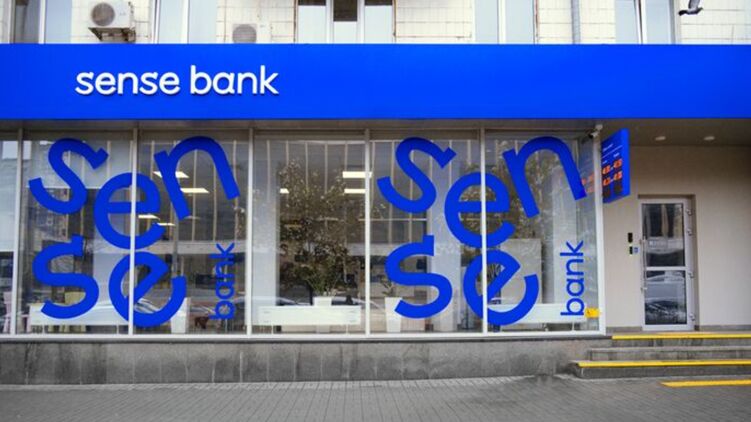
Corruption scandals surrounding Sense Bank could significantly strengthen the position of the bank’s former owners in international arbitration, where their claim against Ukraine seeking compensation for losses from nationalization is being heard.
This was reported to the outlet Strana by sources in legal and financial circles familiar with the details of the proceedings.
Sense Bank was nationalized in 2023 following the adoption of a special law by the Ukrainian parliament — on the basis of National Security and Defense Council sanctions imposed against the bank’s beneficiaries Mikhail Fridman, Pyotr Aven, and Andrei Kosogov. Since the beginning of 2024, the International Centre for Settlement of Investment Disputes (ICSID) in Washington has been hearing a claim by the Luxembourg-registered company ABH Holdings — the owner of Sense Bank — against Ukraine for $653 million (approximately €568.6 million).
Legally, the claim is based on an investment protection agreement concluded by Ukraine with the Belgium-Luxembourg Economic Union in 1996. Since ABH Holdings is registered in Luxembourg, this treaty grants the company the right to seek international arbitration. ABH alleges unlawful expropriation, violation of the fair and equitable treatment standard, and failure to ensure full protection and security of the investment.
The proceedings have been ongoing for more than two and a half years, but 2026 has brought significant new developments linked to events in Ukraine. In April and May, the so-called “Mindich tapes” were made public, containing material about Sense Bank and its relations with individuals named in corruption criminal cases. In particular, the matter concerned Vasily Vesyoly, a former adviser to the bank’s supervisory board for government relations and communications. NABU subsequently conducted searches at his premises, and his case was examined at a session of the Verkhovna Rada’s temporary investigative commission (TIC) in early May.
An even louder scandal erupted in August in connection with the “Forrest Gump” case. NABU and the Specialized Anti-Corruption Prosecutor’s Office (SAPO) alleged a scheme under which, according to investigators, funds were laundered through Sense Bank to post bail of 150 million hryvnias for former Energy Minister Herman Halushchenko; the bail was collected with the involvement of Deputy Head of the Office of the President Iryna Mudra. On August 19, NABU conducted searches, including at the bank’s offices and at the homes of its executives. On the same day, the government removed Sense Bank supervisory board chairman Mykola Hladyshenko and initiated the removal of board chairman Oleksiy Stupak, who became a suspect in the case.
In parallel, ABH Holdings has been actively using the Ukrainian scandals in the arbitration proceedings. As early as May 7 — two days after the parliamentary TIC session — the company published a separate statement on its outcome, directly linking the information that had emerged to the arbitration. On May 15, ABH petitioned the tribunal for permission to submit new evidence, and ICSID agreed. No announcement has yet been made regarding the submission of the “Forrest Gump” information that emerged in August, but lawyers have little doubt that the claimant will file a corresponding motion.
“Ukraine’s position is that Sense Bank was nationalized on national security grounds during wartime. But the NABU materials and the Rada TIC point to an entirely different logic — that the bank was nationalized in order to bring it under the control of a group of individuals close to the current authorities, for the purpose of carrying out corrupt acts and money laundering. This argument will almost certainly be advanced by the claimant, which could seriously weaken Ukraine’s position in the arbitration and increase the likelihood that the claim will be upheld,” a source in legal circles said.
A source in financial circles adds that the Sense Bank case creates serious problems personally for the current NBU Governor Andriy Pyshnyi. According to the source, at least two telling episodes have been recorded. The first: although the nationalization law was formally submitted by members of parliament, Davyd Arakhamia publicly stated during its consideration that the initiator of the law was the NBU, which was then headed by Pyshnyi. The second: on September 10, at a Rada TIC session, former Sense Bank supervisory board chairman Shevki Acuner stated that the recommendation to appoint Vasily Vesyoly as adviser had come personally from the NBU governor.


 English
  Русский